


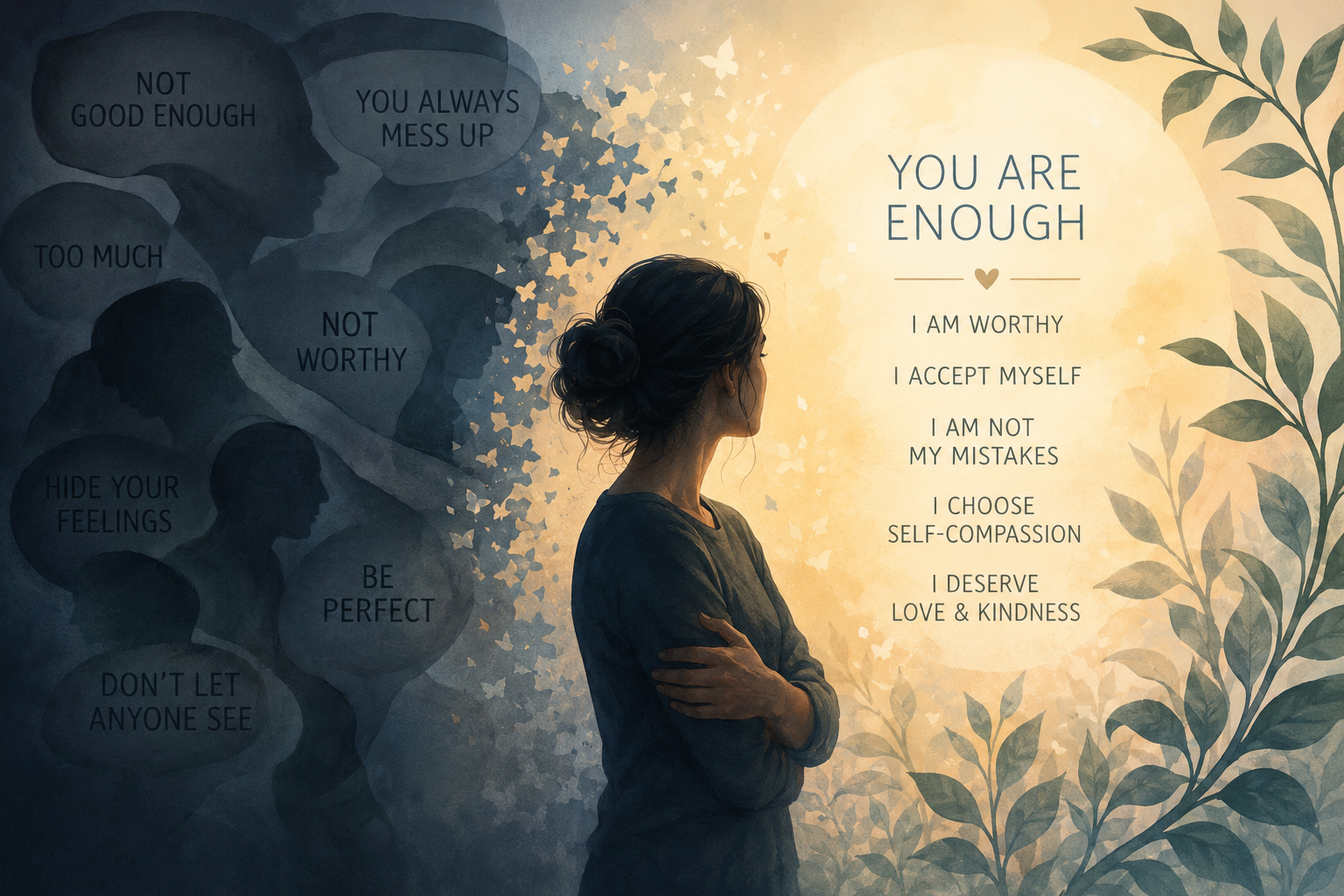
Shame is one of the most powerful emotions people experience, yet it often remains hidden beneath the surface. Unlike emotions such as anger, sadness, or anxiety, shame frequently operates quietly in the background, influencing how people see themselves without drawing much attention to its presence.
Many individuals carry shame for years without realizing the role it plays in their thoughts, behaviors, and relationships. Over time, shame can shape self-worth, impact confidence, and create barriers to emotional well-being.
Understanding how shame develops and how it affects daily life is often the first step toward healing.
Understanding the Difference Between Shame and Guilt
Although shame and guilt are often used interchangeably, they are not the same.
Guilt focuses on behavior. It arises when someone believes they have done something wrong and often motivates them to make amends or correct a mistake.
Shame, however, focuses on identity.
Guilt says:
- “I made a mistake.”
Shame says:
- “There is something wrong with me.”
This distinction is important because guilt can be constructive, while shame often becomes deeply personal and damaging. Instead of addressing a specific action, shame can create a belief that a person’s flaws define who they are.
When shame becomes internalized, it can significantly impact self-esteem and emotional health.
Where Shame Comes From
Shame rarely develops in isolation. It often grows through experiences that communicate, either directly or indirectly, that parts of ourselves are unacceptable.
Common sources of shame may include:
- Repeated criticism
- Emotional neglect
- Bullying or social exclusion
- Rejection from important relationships
- Unrealistic expectations from caregivers or authority figures
- Perfectionistic environments
- Experiences of trauma
Children are especially vulnerable to internalizing these messages because they naturally look to others to understand their value and identity. When a child repeatedly receives messages that they are “too much,” “not enough,” or somehow flawed, those beliefs can become deeply ingrained.
Even in adulthood, these early experiences can continue influencing how people perceive themselves.
The Hidden Nature of Shame
One reason shame can be difficult to recognize is that it rarely announces itself clearly.
Most people do not wake up thinking, “I feel ashamed.”
Instead, shame often appears through patterns such as:
- Chronic self-criticism
- Perfectionism
- Difficulty accepting compliments
- Fear of failure
- Constant comparison to others
- Feeling like an impostor
- Fear of vulnerability
- Persistent feelings of inadequacy
Because these experiences may feel familiar, many individuals assume they are simply personality traits rather than signs of underlying shame.
Someone who constantly pushes themselves to achieve more may believe they are highly motivated, while underneath they may be trying to prove their worth. Similarly, a person who struggles to accept praise may not realize that shame makes positive feedback difficult to believe.
How Shame Shapes Relationships
Shame does not only affect how people view themselves. It also influences how they interact with others.
When someone fears being judged, rejected, or exposed, relationships can feel emotionally risky. As a result, they may engage in protective behaviors designed to avoid vulnerability.
These behaviors can include:
- Avoiding emotional closeness
- Hiding personal struggles
- Seeking constant reassurance
- Becoming highly sensitive to criticism
- People-pleasing to gain approval
- Withdrawing when feeling vulnerable
Unfortunately, these strategies often create the very disconnection people are trying to avoid. When shame remains hidden, authentic connection becomes more difficult because individuals may feel unable to fully show who they are.
Healing Shame Through Self-Compassion
Healing shame is not about convincing yourself that you are perfect.
Instead, it involves developing a more balanced, compassionate, and realistic relationship with yourself.
This process often begins by recognizing the messages that have shaped your self-perception and asking whether those messages are truly accurate.
Questions that may be helpful include:
- What beliefs about myself have I carried for years?
- Where did those beliefs come from?
- Would I speak to someone I care about the way I speak to myself?
- Are these beliefs helping me or limiting me?
Self-compassion allows people to acknowledge imperfections without allowing those imperfections to define their worth.
Over time, this shift can reduce self-criticism, increase emotional resilience, and strengthen self-esteem.
Reflection Questions
Consider taking a few moments to reflect on the following:
- What messages about yourself have stayed with you over the years?
- How do you typically respond when you make a mistake?
- What parts of yourself feel difficult to accept?
- Are there areas of your life where shame may be influencing your choices?
Awareness alone can create meaningful change. Often, recognizing shame’s influence is the beginning of developing a healthier and more compassionate sense of self.
How Therapy Can Help
Shame often develops through relationships and experiences, which means healing frequently happens through supportive relationships as well.
Therapy provides a safe and nonjudgmental space to explore the origins of shame and understand how it continues to influence thoughts, emotions, and behaviors. Through insight, self-reflection, and compassionate support, individuals can begin challenging long-held beliefs that no longer serve them.
At MindSol Wellness Center, our therapists provide thoughtful, insight-oriented care that helps clients better understand themselves and develop lasting emotional growth.
If shame has been quietly shaping how you see yourself, support is available.
Call (941) 256-3725 or visit www.mindsolsarasota.com to learn more about our therapy services in Sarasota, Florida.
