


Why Avoidance Feels Like Relief at First
Delayed Anxiety
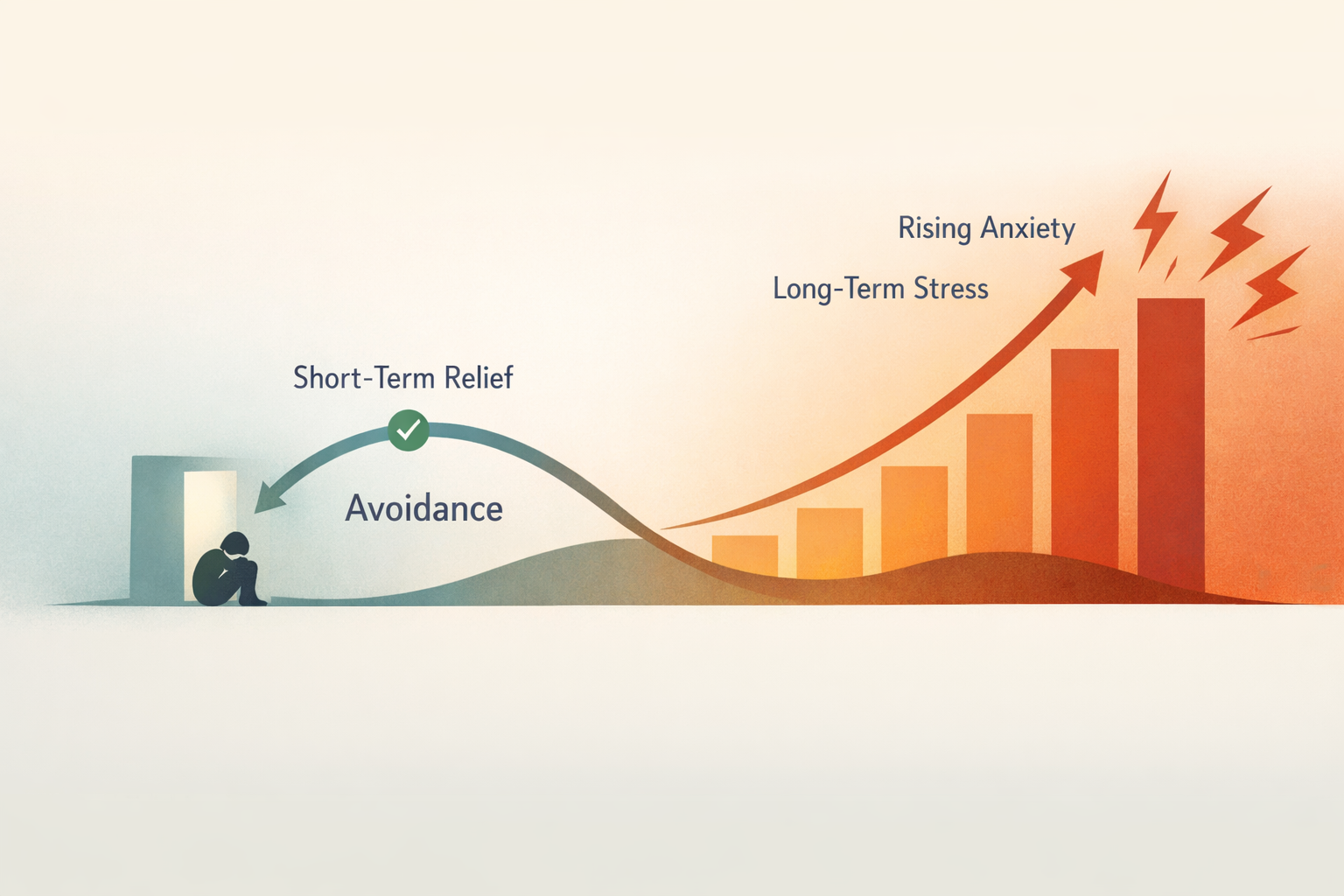
Avoidance rarely looks dramatic. It often appears reasonable, even responsible. You tell yourself you will send the email tomorrow. You postpone the difficult conversation. You distract yourself instead of thinking about what is bothering you. In the moment, it feels like relief.
And that relief is real.
When you avoid something stressful, your nervous system settles. The tension drops. The racing thoughts slow. For a brief period, you feel better. That immediate decrease in discomfort teaches your brain something powerful: avoidance works.
The problem is that it only works in the short term.
The Comfort of Avoidance
Avoidance behaviors can take many forms. Procrastinating. Canceling plans. Changing the subject. Numbing out with screens. Overworking. Staying busy. Minimizing your feelings. Telling yourself it is not a big deal.
Each of these strategies reduces discomfort quickly. If a conversation feels threatening, not having it feels safer. If an assignment feels overwhelming, not starting it feels easier. If an emotion feels too big, pushing it away feels stabilizing.
Your brain is wired to move away from perceived danger. From a survival standpoint, that makes sense. Research on anxiety and avoidance shows that when we escape a feared situation, the immediate drop in anxiety reinforces the behavior, making it more likely we will avoid again in the future. The cycle strengthens itself.
Over time, avoidance becomes automatic.
The Emotional Costs Over Time
What begins as relief slowly turns into something heavier.
When you postpone a difficult task, the task does not disappear. It lingers in the background of your mind. That low-level tension accumulates. You may notice irritability, restlessness, or trouble sleeping. The thing you are avoiding can start to feel even larger than it originally was.
Avoidance also limits growth. Skills are built through exposure and repetition. Conversations become easier by having them. Anxiety decreases by staying in the situation long enough for your nervous system to adjust. When you repeatedly avoid, you miss those corrective experiences.
In many cases, avoidance expands. You avoid one meeting, then several. One conflict, then all conflict. One uncomfortable feeling, then most strong feelings. Life becomes smaller.
How Avoidance Reinforces Fear
Avoidance does more than delay discomfort. It teaches your brain that the avoided situation is dangerous.
If you never have the hard conversation, your brain never learns that you can survive it. If you never tolerate anxiety long enough for it to pass, your nervous system never recalibrates. The fear remains unchallenged and, in many cases, intensifies.
This is why short-term relief often leads to long-term anxiety. The more you avoid, the more sensitive your system becomes. What once felt mildly uncomfortable may begin to feel intolerable.
Avoidance can quietly reshape your identity. You may begin to see yourself as someone who “cannot handle” certain situations. Confidence erodes. Self-trust weakens.
The Shame Cycle Around Avoidance
Avoidance rarely exists without shame.
You may criticize yourself for procrastinating. You may feel weak for canceling plans. You may judge yourself for not being more direct, more disciplined, more resilient.
That shame adds another layer of discomfort. And what do people often do with shame? They avoid it.
So the cycle deepens. Avoid. Feel relief. Experience consequences. Feel shame. Avoid again.
Over time, this pattern can create a sense of stuckness. You know avoidance is not helping, but facing what you are avoiding feels overwhelming.
Reflection Questions
Gently consider:
• What are you postponing right now?
• What relief are you seeking when you avoid it?
• What emotion feels hardest to tolerate?
• What story do you tell yourself about why you cannot face it?
The goal is not self-criticism. It is awareness.
Therapy and Learning to Tolerate Discomfort
Avoidance often developed for a reason. At some point, it likely protected you. Therapy is not about stripping away coping strategies abruptly. It is about understanding them and gradually building capacity for something different.
In therapy, you learn how to tolerate discomfort safely. You practice staying with feelings in manageable doses. You explore the fears underneath avoidance without being overwhelmed by them.
Discomfort, when approached carefully and with support, becomes less threatening. The nervous system learns that anxiety rises and falls. Conversations can be survived. Tasks can be completed in small steps. Emotions can be felt without destroying you.
The relief that comes from avoidance is temporary. The relief that comes from facing something, even imperfectly, is more lasting. It builds resilience, confidence, and a deeper sense of self-trust.
Avoidance feels good at first because it works. But over time, the cost grows. Real freedom often begins with learning that you can stay, even when it is uncomfortable.
If avoidance patterns are increasing anxiety or affecting your relationships, therapy can help you build emotional tolerance and confidence.
MindSol Wellness Center provides individual and relationship counseling in Sarasota, Florida.
Call (941) 256-3725 or visit https://mindsolsarasota.com to schedule an appointment.
