


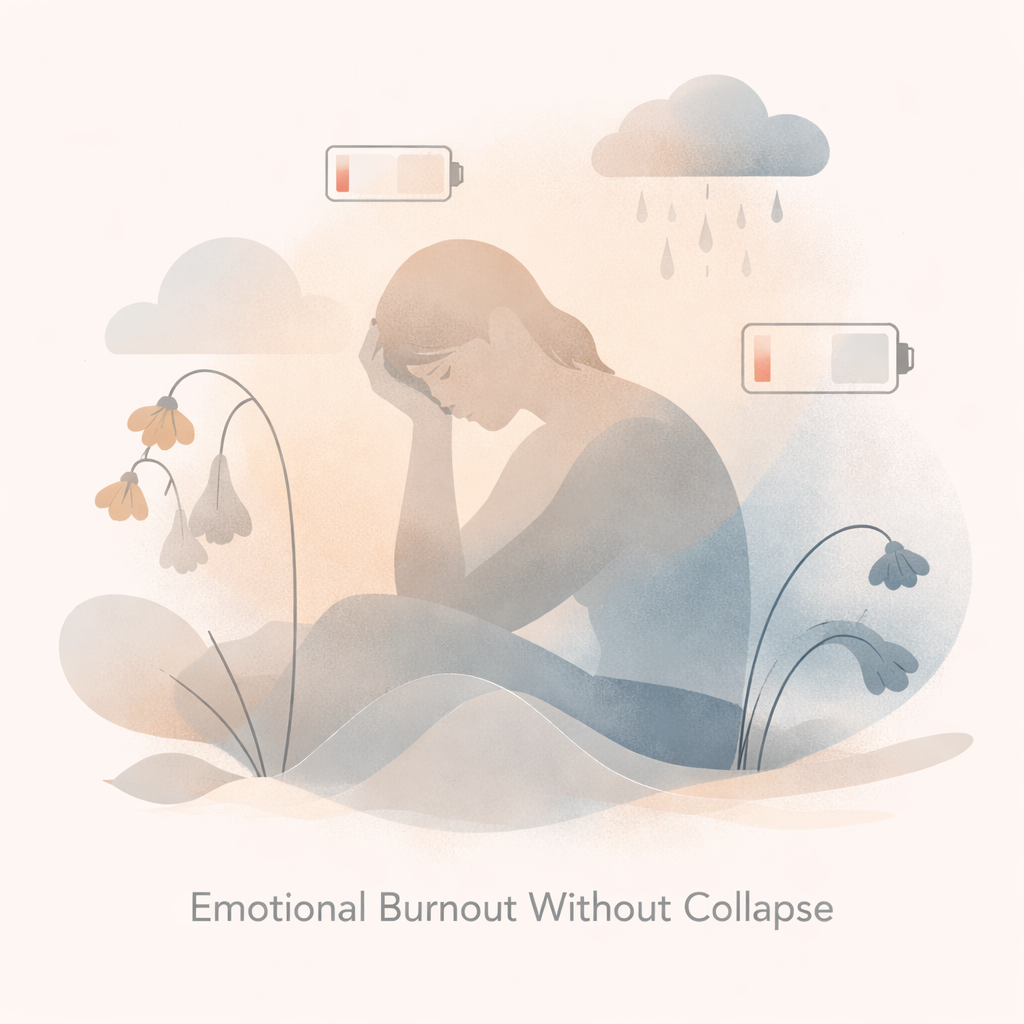
Burnout Can Be Quiet
When most people hear the word burnout, they picture total exhaustion. They imagine someone who cannot get out of bed, is visibly overwhelmed, or has reached a breaking point. While that version of burnout does exist, it is not the only way burnout shows up.
Emotional burnout is often quiet. It does not always come with dramatic fatigue or obvious distress. Instead, it can look like emotional flatness, detachment, or a growing sense that life feels muted. You may still be functioning. You may still be meeting responsibilities. But internally, something feels dimmed or distant.
Many people experiencing this kind of burnout do not recognize it as burnout at all. Because they are still productive, they assume they are fine. Over time, however, the emotional cost becomes harder to ignore.
What Quiet Emotional Burnout Feels Like
Quiet emotional burnout often shows up as a loss of emotional presence rather than physical collapse. You may notice that activities you once enjoyed no longer feel meaningful. Conversations feel more draining than connecting. Relationships can start to feel distant, even when nothing is obviously wrong.
Some people describe it as going through the motions. You are doing what needs to be done, but without feeling fully there. Others notice increased irritability, numbness, or a sense of emotional withdrawal that feels unfamiliar.
This can be especially confusing for people who are used to being capable, reliable, or emotionally available to others. Because there is no clear moment of breakdown, emotional burnout can quietly deepen over time.
Emotional Burnout as a Nervous System Response
Emotional burnout is not a personal failure. It is often a nervous system response to prolonged emotional strain. This can develop through chronic people-pleasing, caregiving roles, high emotional responsibility, or constantly managing yourself to meet expectations.
When emotional demands stay high for too long, the nervous system adapts. Instead of staying in a heightened state of engagement, it may pull back to conserve energy. This can look like detachment, emotional numbness, or a reduced ability to feel pleasure or connection.
Because this adaptation happens gradually, many people miss the signs. They may assume they just need a vacation or more sleep. While rest is important, emotional burnout is not only about physical recovery. It is about emotional restoration and rebuilding capacity.
Why Time Off Alone Is Often Not Enough
Taking time off can help with surface-level stress, but emotional burnout often returns when underlying patterns remain unchanged. If your nervous system has learned to shut down emotionally to cope, simply removing tasks does not always bring emotional vitality back online.
This is why emotional burnout can persist even after a break. You may feel rested physically, yet still disconnected or flat. Without addressing the emotional patterns that led to burnout, the cycle continues.
Therapy and Emotional Sustainability
One of the most effective ways to address emotional burnout is through individual therapy that focuses on long-term emotional sustainability rather than short-term coping. Therapy offers a space to explore what your burnout has been protecting you from and how you learned to overextend emotionally.
At MindSol Wellness Center, therapy is not about pushing yourself to feel better faster. It is about understanding where your emotional energy has been going and learning how to rebuild capacity without self-abandonment.
Common signs of emotional burnout addressed in therapy include emotional numbness, withdrawal, irritability, and chronic detachment. Through a psychodynamic and relational approach, therapy helps you reconnect with yourself in a way that feels safe and sustainable.
If you are interested in working one-on-one, our Individual Therapy services offer support tailored to emotional burnout, anxiety, and long-term stress patterns.
When to Seek Support
Burnout does not mean you are broken. It means something in your emotional system needs care and attention. Quiet burnout deserves just as much support as visible exhaustion.
If you recognize yourself in these patterns, therapy can help you reconnect with your emotional life at a pace that feels manageable and respectful of what you have been carrying.
MindSol Wellness Center offers individual therapy in Sarasota, Florida.
Call (941) 256-3725 or visit https://www.mindsolsarasota.com to learn more or schedule a consultation.
