


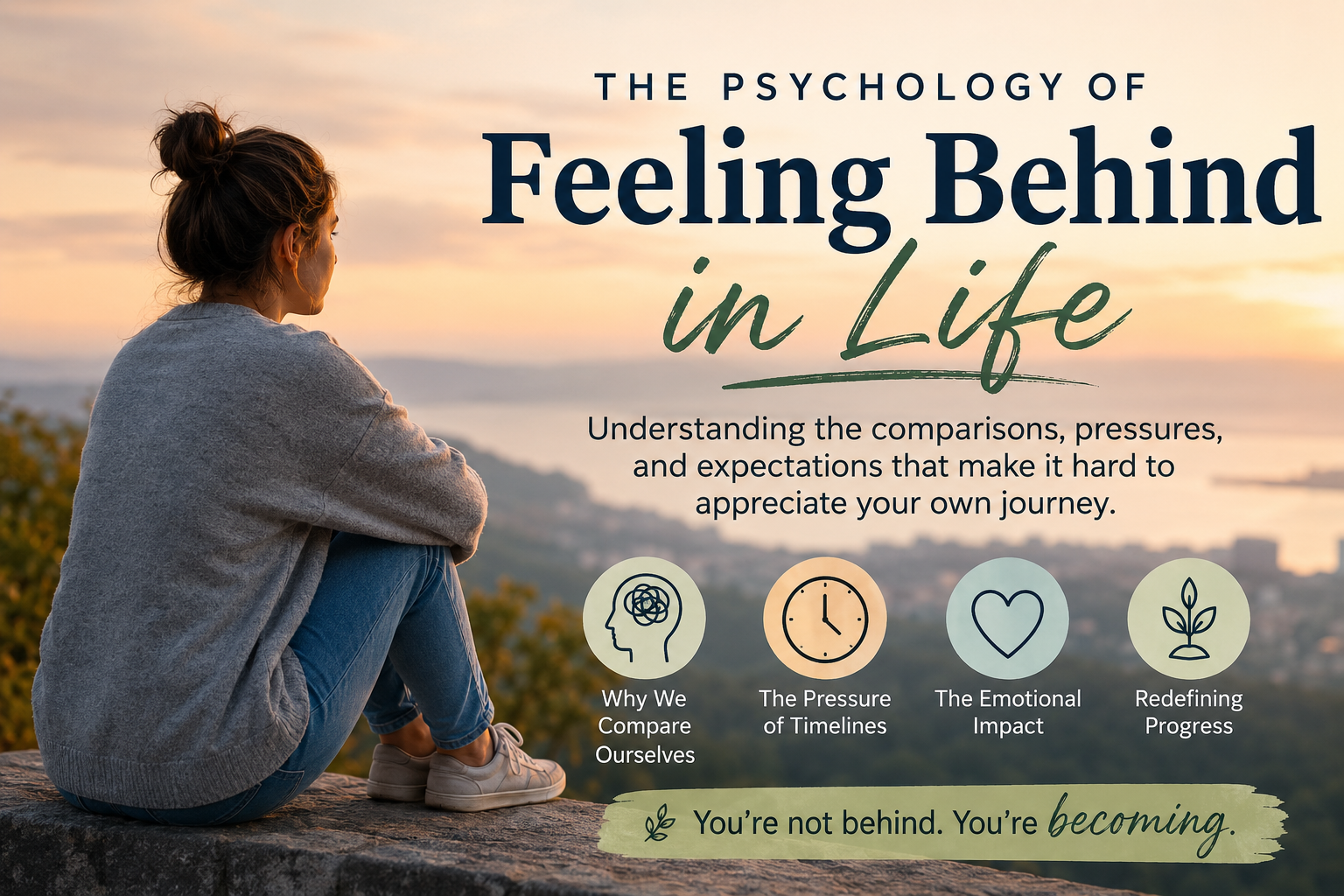
The Psychology of Feeling Behind in Life
At some point, most people compare their lives to those around them.
A friend gets married. A coworker receives a promotion. Someone buys a home, starts a family, or reaches a goal you have been working toward for years. Even when life is moving forward, it can be easy to feel as though everyone else is somehow ahead.
This experience is incredibly common. In fact, many people who appear successful from the outside are quietly wondering whether they are falling behind as well. The feeling often has less to do with actual progress and more to do with perception.
Why We Compare Ourselves
Human beings naturally evaluate themselves in relation to others. Psychologists refer to this as social comparison, a process that helps people understand where they fit within their environment.
Comparison is not always harmful. It can provide motivation, inspiration, and a sense of direction. However, when comparison becomes constant, it often leads to self-criticism and dissatisfaction.
One of the biggest problems with comparison is that it is rarely fair. Most people compare their internal struggles to other people’s external successes.
You see your doubts, setbacks, fears, and mistakes. Meanwhile, you only see the accomplishments that others choose to share. Social media often magnifies this effect by presenting carefully curated snapshots of life rather than the full picture.
As a result, it becomes easy to assume that everyone else has things figured out while you are somehow falling short.
The Pressure of Timelines
Many people carry unspoken expectations about when major life milestones should happen.
These expectations often come from family messages, cultural norms, social media, or personal beliefs that developed early in life.
Examples might include:
- Having a successful career by a certain age
- Getting married by a specific point in life
- Owning a home
- Reaching financial goals
- Having children
- Feeling confident and emotionally secure
The problem is that life rarely follows a predictable schedule.
Unexpected opportunities, challenges, financial circumstances, health concerns, relationships, and countless other factors influence the path people take. Yet many individuals continue measuring themselves against an imagined timeline that may not actually reflect their values or circumstances.
When reality differs from these expectations, feelings of failure can emerge, even when there is no objective reason to believe something is wrong.
The Emotional Impact of Feeling Behind
Feeling behind can have a significant impact on emotional well-being.
Many people experience:
- Increased anxiety
- Chronic self-doubt
- Perfectionism
- Self-criticism
- Difficulty appreciating accomplishments
- Reduced self-esteem
- Feelings of hopelessness or discouragement
Over time, attention becomes focused on what is missing rather than what has already been achieved.
This mindset can create a moving target. Even when goals are reached, satisfaction is often short-lived because the focus immediately shifts to the next perceived deficiency.
As a result, people may spend years chasing a sense of “catching up” without ever feeling like they have arrived.
Redefining Progress
One of the most helpful shifts involves redefining what progress actually means.
Progress is rarely linear. People move through life at different paces based on opportunities, responsibilities, resources, and circumstances that are often invisible to others.
Instead of asking, “Am I where I should be?” it may be more helpful to ask:
- Am I moving in a direction that feels meaningful to me?
- Are my goals aligned with my values?
- What growth have I experienced over the past year?
- What am I overlooking because I am focused on comparison?
These questions encourage a more personal and compassionate understanding of success.
Reflection
Consider the standards you use to evaluate your life.
Who taught you what success should look like?
Are your goals truly your own, or have they been shaped by expectations from family, culture, or social media?
Sometimes the pressure to keep up comes from beliefs that were never intentionally chosen.
Examining those beliefs can create space for a more authentic definition of success.
How Therapy Can Help
Therapy can help uncover the beliefs, expectations, and comparison patterns that contribute to feeling behind.
Through deeper self-exploration, people often develop greater self-compassion, emotional flexibility, and clarity about what truly matters to them. Therapy can also help identify unconscious pressures and longstanding assumptions that may be contributing to feelings of inadequacy.
If you often feel like everyone else is ahead, therapy can help you reconnect with your own path and develop a healthier relationship with progress.
At MindSol Wellness Center, we provide thoughtful, insight-oriented therapy that helps individuals better understand themselves and create meaningful change.
To learn more, visit MindSol Wellness Center or call (941) 256-3725 to schedule an appointment.
