


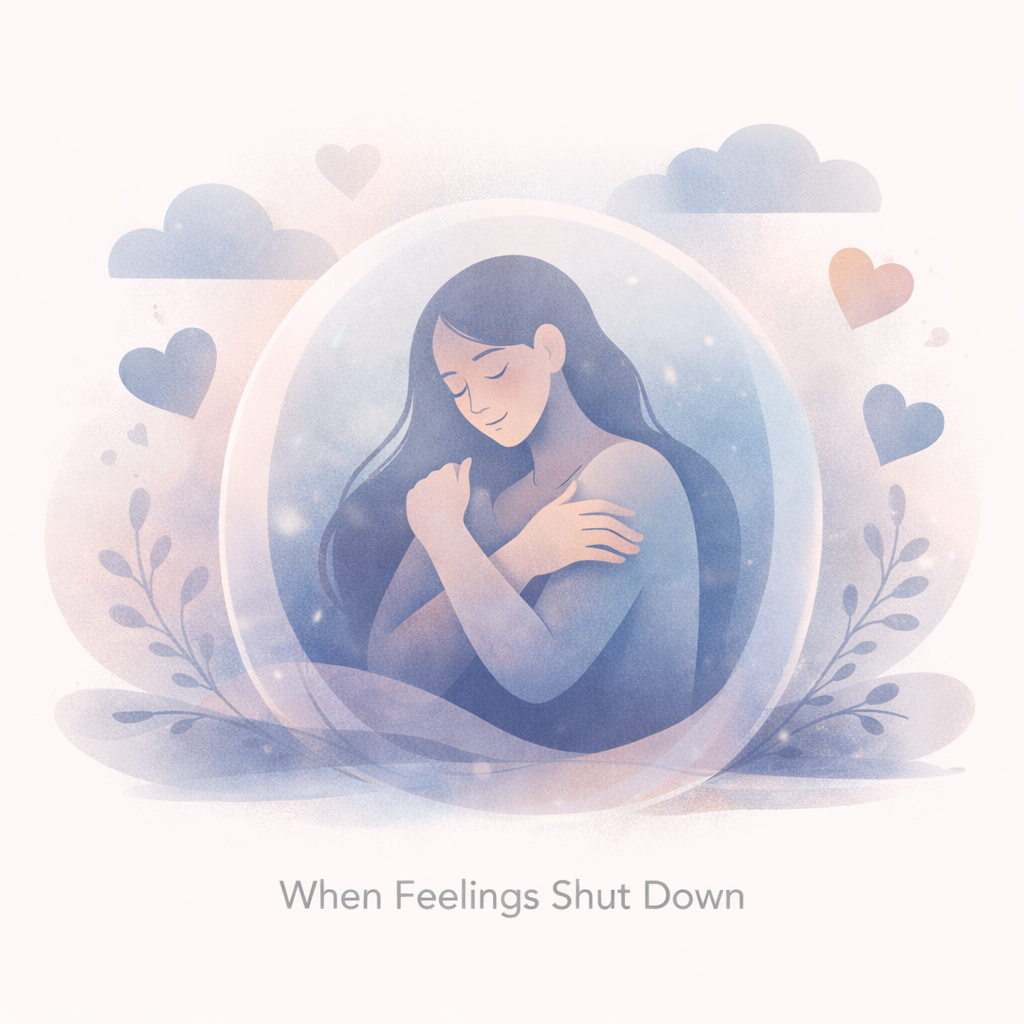
Feeling emotionally numb can be unsettling. Many people worry that numbness means they no longer care, that something is wrong with them, or that they are becoming disconnected from life. In reality, emotional numbness is often not a lack of feeling at all. It is a protective response to overwhelm.
When emotions feel too intense, too constant, or too unsafe to process, the nervous system may shift into a kind of emotional shutdown. This is not a conscious choice. It is the body’s way of preserving energy and preventing overload when stress has exceeded a manageable level.
Rather than being a sign of emotional failure, numbness is often a signal that you have been carrying too much for too long.
How Overwhelm Leads to Numbness
Emotional overwhelm can come from many sources. Chronic stress, unresolved grief, ongoing anxiety, trauma, relationship strain, or prolonged caretaking can all push the nervous system beyond its capacity.
When this happens, the body may reduce emotional intensity as a form of self protection. Instead of feeling everything all at once, the system dulls emotional signals. This can create a sense of distance from both painful and positive experiences.
In this way, numbness is not the absence of emotion. It is the result of emotional overload.
What Emotional Numbness Can Look Like
Numbness does not look the same for everyone. For some, it shows up as a flat or muted emotional experience. Joy, sadness, anger, and excitement all feel faint or inaccessible. You may know how you are “supposed” to feel but struggle to actually feel it.
Others describe functioning well on the outside while feeling disconnected internally. You go to work, maintain relationships, and handle responsibilities, yet something feels missing or distant. Conversations feel mechanical. Activities that once brought meaning feel neutral.
Some people experience numbness alongside chronic anxiety. The nervous system stays on high alert for long periods, and emotional shutdown becomes a way to cope with constant tension. This pattern is commonly explored in anxiety therapy.
Why Numbness Is Often Misunderstood
Because numbness feels empty or unfamiliar, many people judge it harshly. They may push themselves to feel more, criticize themselves for being detached, or worry that numbness means they are broken.
In reality, numbness often develops because you were feeling too much for too long. It reflects endurance, not weakness. The emotional system learned that shutting down was safer than staying fully open.
Understanding numbness as a response, rather than a defect, is an important step toward healing.
Reconnecting Safely in Therapy
Therapy does not force emotions to return. At MindSol Sarasota, numbness is approached with curiosity and respect. Rather than pushing feelings to surface, therapy focuses on understanding what numbness has been protecting you from.
Through individual therapy, clients explore the underlying stressors, fears, or emotional burdens that led to shutdown. This process happens gradually, at a pace that feels manageable and safe.
As trust builds and overwhelm decreases, emotions often return naturally. Not all at once, and not in overwhelming waves, but in tolerable, meaningful ways.
Therapy also helps strengthen emotional regulation, so feelings can be experienced without becoming overwhelming again.
Moving Forward With Compassion
Feeling numb does not mean you are incapable of feeling. It often means your system has been trying to protect you through a difficult period of life.
With support, awareness, and patience, numbness can soften. Emotional connection can return in a way that feels grounding rather than overwhelming.
If emotional numbness has become a familiar part of your experience, therapy may help you understand what your system needs to feel safe again.
MindSol Wellness Center offers individual therapy in Sarasota, Florida.
Call (941) 256-3725 or visit www.mindsolsarasota.com to learn more or schedule an appointment.
